
Is safari safe? For most travellers, yes — a guided safari in Kenya or Tanzania is a well-run, low-risk way to see wildlife, provided you follow your guide’s rules, take malaria precautions, and sort out vaccinations and insurance before you fly. The risks are real but manageable: malaria, long road journeys, and the wildlife itself — and each one has a straightforward answer. This guide covers all of them honestly, including what you need to confirm with your doctor.
Is safari safe for first-time travellers?
For most people, the honest answer to is safari safe is yes — with one condition: you do it guided, and you follow the rules. A safari is not a zoo visit and it is not a walk in the park. You are in wild country, and the animals are wild. But the system around you is built for that. Your driver-guide spends every day reading animal behaviour, your camp is set up so that you are never wandering around alone after dark, and the parks have rules that exist because they work.
Most safari incidents you read about involve someone breaking a basic rule — leaving the vehicle, approaching an animal on foot, or walking around camp at night unescorted. Do those things and you add risk that was never part of the trip. Follow the rules and a safari is one of the safer adventure holidays you can take: no traffic to cross, no crowds, no nightlife, and a professional with you from the first morning to the last. If you are nervous, say so in your enquiry — a private vehicle and a slower first day make a real difference.
Is safari safe on a guided game drive?
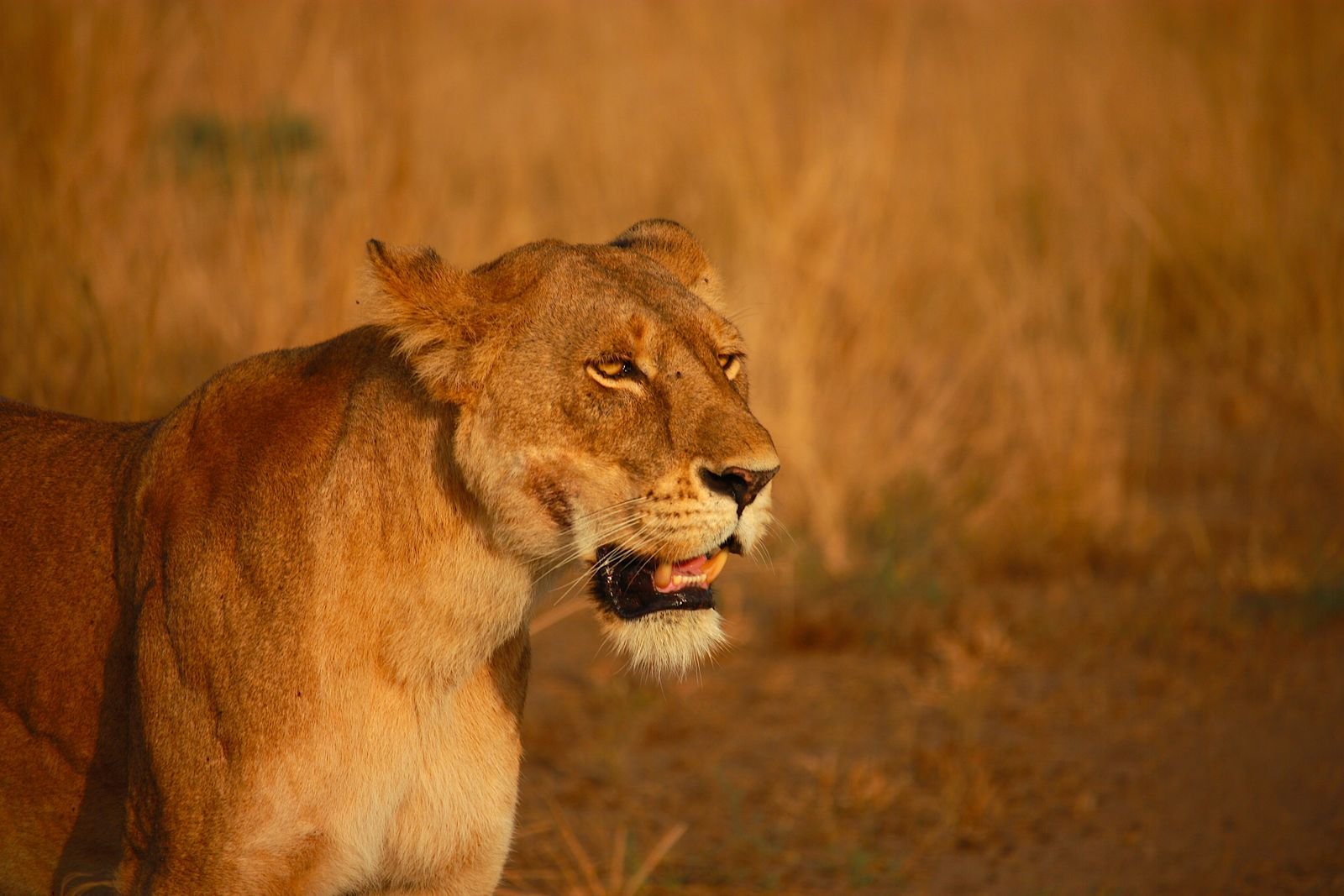
Your game drives are the part of the safari where you are closest to big animals, and they are also the part with the clearest rules. A lion or an elephant sees a safari vehicle as one large, uninteresting object — it is not interested in what is inside it. The moment someone stands up, leans out, or gets out, that changes. That is why the first rule of every game drive is simple: stay in the vehicle unless your guide tells you otherwise.
Why you stay in the vehicle
Inside the vehicle, with everyone seated, you are part of the landscape. Standing up or leaning out breaks that outline and can draw attention you do not want. Keep your arms and camera inside, keep your voice down when you are close to animals, and never try to feed or touch anything — even the animals that look calm. Your guide will tell you when it is safe to stand up through the pop-up roof, and when to sit back down.
What your guide is actually doing
Your guide is not just driving to where the animals are. They are reading behaviour all day — ears, tail, posture, the direction an animal is looking — and keeping a distance the animal is comfortable with. They know when to wait, when to move on, and when a sighting has had enough. If an animal walks towards the vehicle, the guide stays calm and lets it pass. Trust their judgement over your camera: the best sightings come from patience, not from getting closer.

Is safari safe at camp? Wildlife at night
Tented camps sit inside the bush, not behind a fence, and animals pass through at night. That is normal, and it is part of the experience — you will hear lions calling and hyenas whooping, sometimes close by. The camps are designed for it. On arrival you will get a short safety briefing: after dark, you do not walk around camp on your own. A guide or askari walks you between your tent and the dining area, and if you need to leave your tent at night, you call for an escort.
Stay in your tent overnight, keep the tent zipped, and do not keep food in your tent — food smells bring animals in. If an animal is near your tent, stay inside and wait; it will move on. This sounds dramatic until you have done it once. By the second night, most travellers are asleep within minutes, and the sounds of the bush are the thing they miss most when they get home.

Is safari safe from malaria? The honest picture
Both Kenya and Tanzania are malaria areas, and you should plan for that rather than hope it does not apply to you. Malaria is carried by mosquitoes that bite between dusk and dawn, and the risk is real — but it is also one of the most preventable risks on a safari. The approach is simple: avoid bites, and take prophylaxis if your doctor advises it.
How to avoid bites
Use insect repellent on exposed skin in the evenings, wear long sleeves and long trousers after sunset, and sleep under the mosquito net your camp provides. Keep your tent zipped at night. Camps are usually sited away from standing water, and most have nets on every bed — use them, even if you do not see mosquitoes.
Malaria tablets: ask your doctor
Malaria prophylaxis is commonly recommended for travel to Kenya and Tanzania, but which one suits you depends on your medical history, other medication, and the length of your trip — so this is a conversation for your doctor or a travel clinic, not for a blog post. Start the course as directed and finish it. No tablet is completely effective, so bite prevention still matters. And if you develop a fever during your trip or in the weeks after you get home, seek medical advice promptly and tell the doctor you have been in a malaria area.
- Ask your doctor or a travel clinic about malaria prophylaxis well before departure.
- Check whether you need a yellow fever certificate for your route — it is required if you arrive from, or transit more than 12 hours through, a yellow-fever risk country, including Kenya.
- Make sure your routine vaccinations are up to date.
- Arrange travel insurance that covers medical treatment and emergency evacuation.
- Pack insect repellent and any regular medication, plus a copy of your prescriptions.
- Carry your yellow fever certificate with your passport if one applies to your trip.
Vaccinations for Kenya and Tanzania: is safari safe without them?
There is no single list that fits everyone, because it depends on your route, your medical history, and what you have already had. The one rule that catches travellers out is yellow fever: a certificate is required if you arrive from, or transit more than 12 hours through, a yellow-fever risk country — and that includes Kenya. So if your trip combines Kenya and Tanzania, or you fly into Tanzania via Nairobi, you will very likely need one.
Talk to your doctor or a travel clinic well before departure. They will check your records, advise on yellow fever, and make sure your routine vaccinations are up to date. Carry your yellow fever certificate with your passport — keep it with your travel documents, not in your checked luggage. Rules change, so check official travel advice for both countries before you fly, and do not leave this to the week of departure.
Is safari safe to travel with children?
Yes — is safari safe for children? A family safari in Kenya and Tanzania is one of the most popular trips we run. A private vehicle makes the biggest difference for families: you set the pace, stop when the children need a break, and eat when they are hungry. Children need to stay close to an adult in the vehicle and at camp, and they need to be able to sit reasonably quietly during a game drive — be honest with yourself about your child’s temperament before you book a long drive.
Ask your doctor about malaria prophylaxis for children, and pack their medication in your hand luggage. Some camps set minimum ages for younger children, so mention your children’s ages in your enquiry and we will match you with camps that welcome them. The children who get the most out of a safari are usually the ones who have been told what to expect: early mornings, long quiet drives, and animals that do not perform on demand.
Road safety: is safari safe on the long drives?
The riskiest part of most safaris is not the wildlife — it is the road. The drive from Nairobi to the Maasai Mara takes about 5–6 hours by road, and the road is rough in places, with dust, livestock, and slow trucks. Arusha to Tarangire is about 2 hours; Arusha to Ngorongoro is about 3–4 hours. Driving times are approximate and road-dependent, and they feel longer than they sound.
Your driver-guide drives these roads every day and knows where the bad stretches are. Wear a seatbelt where one is fitted, and do not ask your driver to hurry — the schedule is built around the driving time, not the other way round. If a long drive worries you, flying between parks is possible on some routes; the cost depends on the route and season, and the exact figure is confirmed in your written quote. Never drive yourself at night, and never walk along a main road after dark.
Is safari safe for food, water and sun?
Eat at your camp or lodge, where food is prepared for visitors, and drink bottled or treated water — your camp will provide it. Wash your hands before meals, as you would anywhere. The sun is strong at the equator, so wear a hat, use sunscreen, and carry sunglasses. Mornings are cold in the Mara and on the Ngorongoro crater rim, so pack a warm layer for the early drive and peel it off as the day warms up.
The middle of the day is hot and quiet — that is why the safari day has a long rest at camp, and why the best game viewing happens in the cooler hours.
Travel insurance: is safari safe without it?
Buy travel insurance before you fly, and read what it actually covers. It should include medical treatment, emergency evacuation by air, trip interruption, and lost luggage — and you should check that it covers safari activities. Keep your policy number and the insurer’s emergency number with you, not just on your phone.
There are two rules that catch travellers out. From October 2026, Kenya asks most short-stay visitors for proof of travel health insurance (about US$50,000 cover) — check the official portal for the current rule before you travel. And in Zanzibar, every foreign visitor must buy compulsory inbound travel insurance from the Zanzibar Insurance Corporation — US$44 per person, valid up to 92 days. If your trip ends in Zanzibar, that insurance is not optional.
Staying safe in towns and at the airport: is safari safe there?
Nairobi and Arusha are working cities, and the same common sense applies as in any city. Use your camp’s transfers rather than hailing a car yourself, do not walk alone after dark, keep valuables out of sight, and use the hotel safe. Keep your passport in the safe and carry a copy with you during the day.
At the airport, the main risk is not crime but confusion. Nairobi’s Jomo Kenyatta International Airport is the gateway for Kenya trips; Kilimanjaro International Airport (near Arusha) is the gateway for Tanzania trips. Have your entry approval ready with your passport, and apply for entry permission only through the official portals — copycat websites charge extra and sometimes deliver nothing. If someone offers to “help” with your visa at the airport, walk past them.
What to do in an emergency
The most important rule is to say something early. If you feel unwell — a fever, dizziness, an upset stomach that is getting worse — tell your guide straight away. Guides would far rather stop a game drive and sort out a small problem than deal with a big one later, and there is no prize for toughing it out. The same applies to an injury, a twisted ankle at camp, or anything that does not feel right. Your guide is trained for this, can reach the camp and the nearest clinic quickly, and knows the route to the nearest hospital.
Keep your phone charged and your insurance emergency number with you — on paper, not just on the phone. If you take regular medication, carry enough for the whole trip in your hand luggage, plus a copy of your prescription. And before you fly, tell someone at home your itinerary and the name of the camp you are staying at, so that if anything happens, the people who need to know can be reached.
Keep reading
The practical detail behind this guide is in four companion posts. Our safari packing list covers what to wear and bring, including the layers for cold mornings and the soft bag your vehicle needs. The Kenya and Tanzania visa guide walks through the eTA and e-visa step by step, including the yellow fever rule. Our safari tipping guide explains who to tip, when, and how to do it respectfully. And what to expect on a game drive describes a real safari day — wake-up times, the morning drive, meals, and wildlife etiquette.
Frequently asked questions
Is it safe to go on safari with children?
Yes, on a guided trip with a private vehicle. Children need to stay close to an adult in the vehicle and at camp, and you should ask your doctor about malaria prophylaxis for them. Some camps set minimum ages, so mention your children’s ages in your enquiry and we will match you with camps that welcome families.
Do I need malaria tablets for a safari?
Both Kenya and Tanzania are malaria areas, and malaria prophylaxis is commonly recommended. Which one suits you depends on your medical history and other medication, so ask your doctor or a travel clinic. Tablets do not replace bite prevention — use repellent, long sleeves in the evening, and the mosquito net at camp.
Is it safe to sleep in a tented camp?
Yes. Tented camps are designed for the bush: animals may pass through at night, and the camp’s rule is that you do not walk around after dark without an escort. Stay in your tent overnight, keep it zipped, and do not keep food in it. If an animal is near your tent, stay inside and wait — it will move on.
What happens if I get sick or injured on safari?
Tell your guide straight away — they are trained to handle it and can reach the camp and the nearest clinic quickly. Your travel insurance should cover medical treatment and emergency evacuation by air, so keep your policy number and the insurer’s emergency number with you. If you develop a fever during or after the trip, seek medical advice promptly and mention you have been in a malaria area.
Is Kenya or Tanzania safe for solo travellers?
A guided safari suits solo travellers well — you are with a guide and other travellers all day, and camps are social places in the evening. A private vehicle is worth considering if you want control over the pace. In towns, use your camp’s transfers, do not walk alone after dark, and keep valuables out of sight.
So — is safari safe? For most travellers, on a guided trip, yes. The risks are known, the precautions are simple, and the system around you is built by people who do this every day. Sort out your health advice and insurance before you fly, follow your guide’s rules, and the safari itself is the easy part. If you want help planning a trip that fits your comfort level, contact us and tell us what you are worried about — we will build the itinerary around it.
Ready to turn this into a real safari?
Tell us your dates, group size and the parks you want to see. We will confirm the exact price in a written quote — no price is published here until the owner confirms it.