The great migration calendar is simple to follow once you know the pattern: the herds spend January to March calving on the southern Serengeti plains, move north through the western Serengeti in April to June, cross the Mara River between the northern Serengeti and the Maasai Mara from about July to September, and drift back south in November and December. The animals follow the rain, so the dates shift a little every year — but the route barely changes.
That route is what this great migration calendar maps out, month by month, with honest notes on what you can realistically expect. No month guarantees a river crossing, and no month is “the best” for everyone. The right month depends on whether you want crossings, newborn calves, fewer visitors, or lower park fees. If you are still choosing between the two countries, our month-by-month guide to the best time for a Kenya safari and the matching guide to the best time for a Tanzania safari compare the seasons side by side.

The great migration calendar at a glance
Use this table as your starting point. The “where” column is where most of the herds are — the migration is spread out, and the front and the tail of the herds can be weeks apart.
| Month | Where the herds are | What is happening | Best for |
|---|---|---|---|
| January | Southern Serengeti | Grazing on the short-grass plains; calving begins late in the month | Calving, predators, green landscapes |
| February | Southern Serengeti | Peak calving — hundreds of thousands of calves born, mainly in February | Newborn calves and big-cat action |
| March | Southern Serengeti | Calves growing fast; herds start to drift as the rains end | Calving tail-end, fewer visitors |
| April | Western Serengeti | Herds move west and north; the long rains arrive | Green season, dramatic skies, low crowds |
| May | Western and central Serengeti | The column stretches north; river crossings of the Grumeti begin | Grumeti crossings, lush scenery |
| June | Grumeti River area, western Serengeti | Grumeti crossings possible; herds gather before the push north | Grumeti crossings, long days on safari |
| July | Northern Serengeti and Maasai Mara | Mara River crossings begin; herds arrive in the Mara | River crossings, peak wildlife |
| August | Northern Serengeti and Maasai Mara | Crossings most likely; herds spread across the Mara plains | River crossings, best all-round game viewing |
| September | Northern Serengeti and Maasai Mara | Crossings still possible early in the month; herds graze the Mara | Crossings, big cats, fewer visitors than August |
| October | Maasai Mara, then moving south | Last crossings; the herds start the journey back toward Tanzania | Late-season Mara, quieter parks |
| November | Eastern Serengeti | Herds move south through the eastern Serengeti; short rains begin | Green season, value, dramatic light |
| December | Southern Serengeti | Herds arrive back on the southern plains; the cycle restarts | Early calving, festive-season safaris |
One warning before the detail: the herds move with the rain, and the rain does not follow a calendar. In a dry year the herds may reach the Mara River in late June; in a wet year they may still be in the central Serengeti in July. Build your trip around the season, not a single date, and give yourself enough days that a slow herd does not cost you the whole trip.
January to March on the great migration calendar: calving season in the southern Serengeti
The southern Serengeti in the first three months of the year is the quietest, greenest version of the migration — and, for many experienced safari travellers, the most rewarding. The herds gather on the short-grass plains of the south, where the grass is rich in the minerals that newborn calves need. Calving runs from January into March, with the peak in February, when hundreds of thousands of calves are born in a few short weeks.
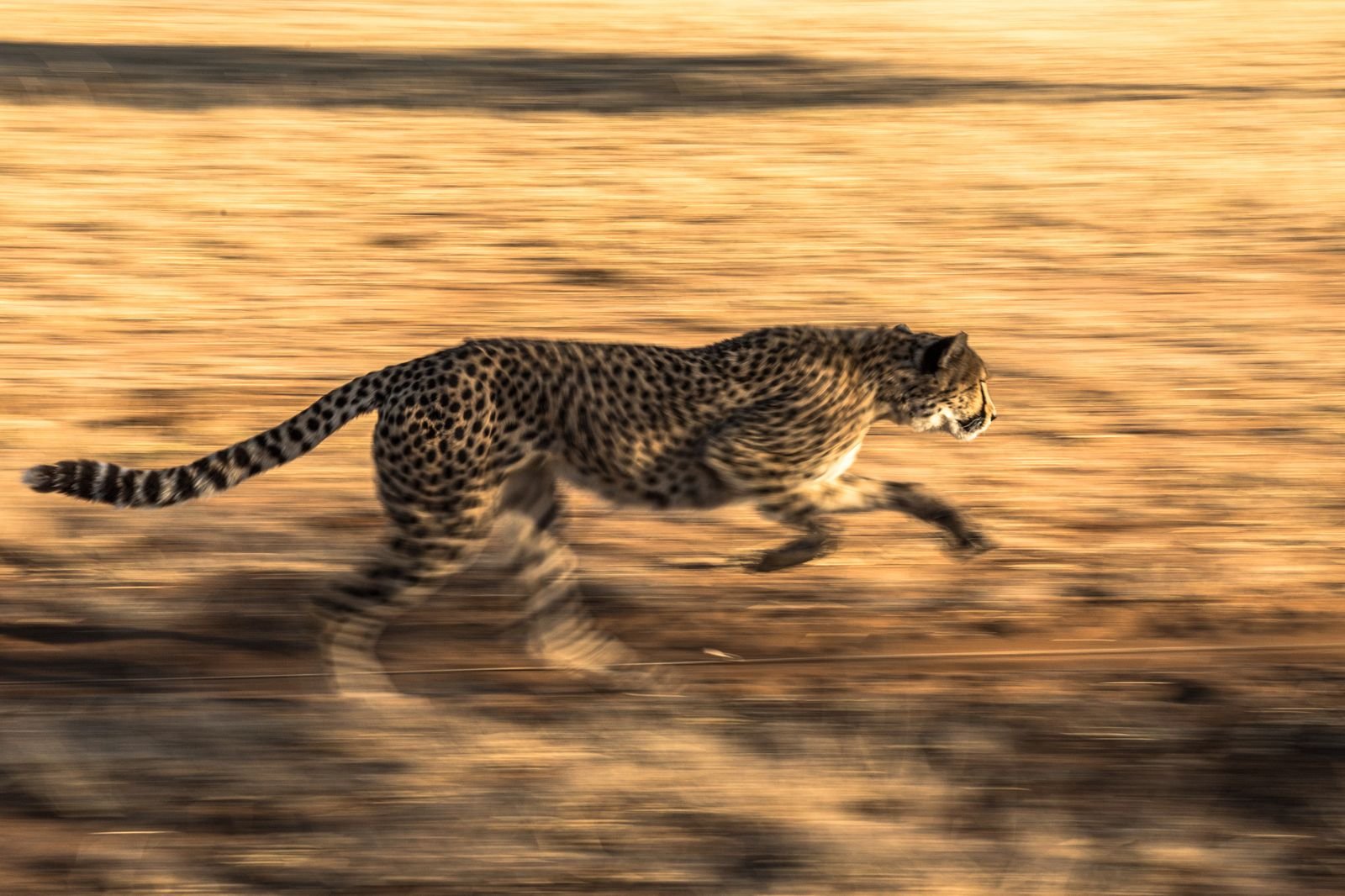
That concentration of newborns is what draws the predators. Lions, leopards, cheetahs and hyenas follow the herds, and the southern plains in February offer some of the most concentrated predator action anywhere in Africa. It is also the best time to see cheetahs, which hunt on the open plains in daylight and are easier to spot when the grass is short. Our guide to where to see the Big Five in Kenya and Tanzania explains which parks give you the best chance of each animal, and why the southern Serengeti in calving season is one of the strongest all-round choices.
Who calving season suits — and who it does not
On the great migration calendar, Calving season suits travellers who want wildlife behaviour rather than a single famous spectacle: thousands of animals, newborn calves taking their first steps within minutes of birth, and predators working the herds. You will not see a river crossing or the Mara, and the southern plains are remote — the drive from Arusha takes most of a day. If you only have three or four days, the Mara in August is more practical; with a week, February is hard to beat.
The weather is warm, with short afternoon showers rather than all-day rain. The landscape is green and photogenic, and because it is outside the peak crossing months, the southern plains are noticeably quieter than the Mara in August.
April to May on the great migration calendar: the long rains and the move west
As the southern plains dry out, the herds start moving — first west, then north, through the western Serengeti. April and May bring the long rains, which is the main reason many travellers avoid these months. That is a mistake if you know what you are giving up and what you are getting.
What you give up: easy river crossings are unlikely, some tracks get muddy, and afternoon rain can cut a game drive short. What you get: the greenest Serengeti of the year, dramatic storm light, far fewer vehicles, and the herds strung out in long columns across the western corridor — a sight that looks nothing like the crowded riverbanks of August. The long rains also mean the grass is tall, so animals can be harder to spot than in the dry season, but the herds themselves are impossible to miss.
May is the better of the two months for most travellers. The herds are further north, the Grumeti River crossings start to become possible late in the month, and the worst of the rain is usually passing. If your dates are fixed to April or May and you want the migration, base yourself in the western or central Serengeti rather than the far south, and plan for flexible days — a rainy afternoon is a good time to rest at camp, not a ruined day.

June on the great migration calendar: the Grumeti River
June is the month the migration starts to feel dramatic. The herds reach the Grumeti River in the western Serengeti, and the first river crossings of the year happen here — smaller and less famous than the Mara crossings, but real crossings with crocodiles in the water and the herds hesitating on the banks. The Grumeti is also where the migration columns bunch up, so you can watch thousands of animals moving through a single valley in a day.
June is a good compromise month. The rains are mostly over, the grass is still green, and the peak-season crowds have not yet arrived. Park fees in Tanzania are in the peak-season band from mid-May, so there is no fee saving in June, but camps and vehicles are easier to book than in August. If a Mara crossing is your main goal, June is too early — the herds are still weeks away from the Mara River. If you want a river crossing without the August crowds, June on the Grumeti is the honest alternative.
June also pairs well with the Ngorongoro Crater, about a 3–4 hour drive from Arusha — see our month-by-month guide to the best time for a Tanzania safari for June in the context of the whole northern circuit.
July to September on the great migration calendar: the Mara River crossings
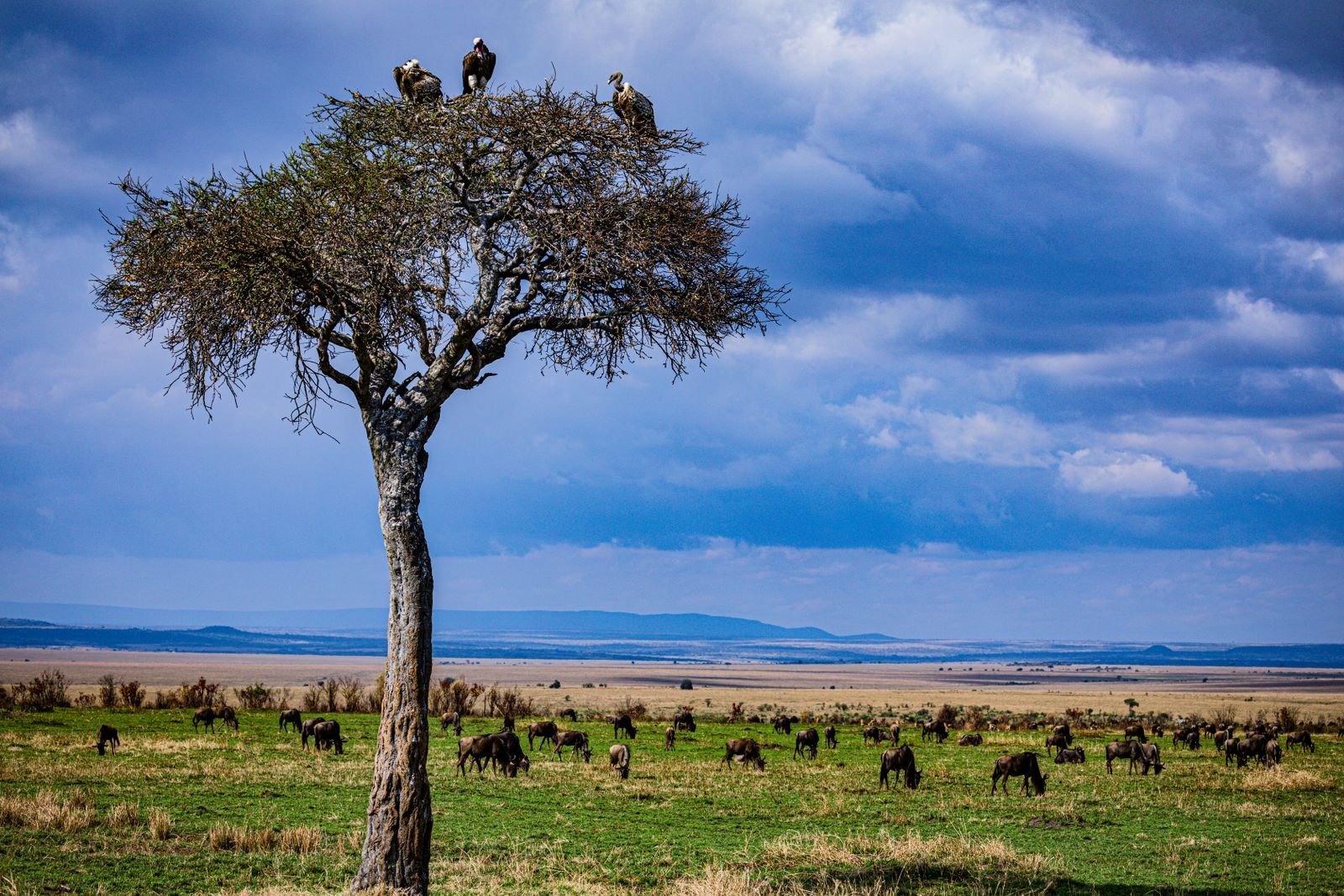
This is the season the great migration calendar is famous for. From July, the herds push into the northern Serengeti and across into the Maasai Mara, and the Mara River crossings — thousands of wildebeest plunging down steep banks into crocodile-filled water — become possible on the great migration calendar. The crossings are most likely from July to September, with August usually the strongest single month.
But “most likely” needs unpacking, because it is the most misunderstood part of the migration. A crossing is not a daily show. The herds gather on the riverbanks, hesitate, sometimes cross and sometimes turn back, and a crossing can happen at any point along a long stretch of river. You can wait at one crossing point all day and see nothing, while a crossing happens two kilometres away.
That is why the honest advice is always the same: stay near the river for at least three or four days, and go with a driver-guide who tracks the herds and reads the behaviour. Our detailed guide to Mara River crossings, and how Kenya and Tanzania viewing differs, explains the two sides of the river, the best bases, and how to plan the wait realistically.
Kenya or Tanzania for the crossings?
The Mara River forms part of the border, and the herds cross it in both directions — north into Kenya’s Maasai Mara and south back into Tanzania’s northern Serengeti. In practice, most crossing viewing happens from the Kenyan side, because the Mara’s riverbanks have more established crossing points and more camps nearby. The Tanzanian side, in the northern Serengeti, is quieter and the crossings there feel wilder, but the logistics are harder and the area is more remote. A combined trip that covers both sides is the most complete answer, and it is the trip we build most often for crossing-focused travellers — see our Kenya and Tanzania combined safaris.
July to September is also the best all-round game viewing of the year in both countries. The grass is short, the animals concentrate around water, and the big cats are active. It is also the busiest and most expensive time to travel. The Maasai Mara’s entry fee is US$200 per non-resident adult per day from July to December (checked October 2026), double the January–June rate of US$100, and that fee is charged per day — so a four-day Mara stay costs US$800 per adult in fees alone. Fees change — confirm the current rate before you book.
How many days do you need at the river?
Three days at the river is the minimum for a realistic chance of a crossing; four or five days is better. A two-day visit can work if the herds are already crossing when you arrive, but you are gambling on timing you cannot control. Build the river stay into a longer trip — for example, two days in the central Mara or Serengeti first, then three or four days at the river — so the trip is worthwhile even if the crossing does not happen on your days.
October on the great migration calendar: the last crossings and the turn south
October is the month the migration starts to leave the Mara. The herds graze the Mara plains early in the month, and a late crossing is still possible, but by mid-to-late October the columns are moving south through the eastern Serengeti toward the southern plains. October suits travellers who want the Mara without the August crowds: the wildlife is still excellent, the grass is short, and the big cats are still active, but the visitor numbers drop sharply.
The trade-off is that the crossing window is closing — do not book October for a crossing. Book it for great Mara game viewing with fewer vehicles. The Mara fee is still US$200 per adult per day in October (checked October 2026), so the saving is in atmosphere, not money.
November to December on the great migration calendar: the short rains and the return south
November brings the short rains, and the herds move south through the eastern Serengeti. This is the green season in Tanzania: the landscape turns green within days of the first rain, the light is soft and dramatic, and the parks are quiet. December sees the herds arriving back on the southern plains, and the cycle restarts. If you travel in December, you are at the start of the calving story rather than the end of the crossing story.
November and December suit travellers who want the Serengeti to themselves and do not mind afternoon rain. The Serengeti’s low-season entry rate of US$70.80 applies only 15 March to 15 May — November and December are in the peak band at US$82.60 (checked July–October 2026) — so the saving is in availability and atmosphere, not the park fee.

How to choose your month on the great migration calendar
Start from what you most want to see on the great migration calendar, then check what that month costs you in crowds, fees and logistics.
- For a river crossing: July to September, based at the Mara River, for at least three or four days. August is the strongest single month, but also the busiest.
- For newborn calves and predators: February in the southern Serengeti. The most concentrated wildlife action of the year, with far fewer visitors than August.
- For the best all-round game viewing: August to September in the Mara or northern Serengeti, or June to October anywhere in the Mara-Serengeti ecosystem.
- For fewer visitors and green landscapes: November, or April to May in the western Serengeti. Expect afternoon rain and taller grass.
- For the lowest park fees: January to June in the Maasai Mara, where the fee is US$100 per adult per day rather than US$200 (checked October 2026). In Tanzania, the Serengeti low-season entry rate of US$70.80 applies 15 March to 15 May. Fees change — confirm the current rate before you book.
- For a first safari: July to October, when the wildlife is easiest to find and the weather is most reliable. The trade-off is price and crowds, so book early.
How long do you need for a migration safari?
Five days is the practical minimum for a migration-focused trip, and seven days is better. The distances are the reason: Nairobi to the Maasai Mara is about 5–6 hours by road, and the southern Serengeti is a full day’s drive from Arusha. A three-day trip can work if you fly in and base yourself in one place, but you will spend a large share of the trip travelling, and a single slow day can cost you the crossing.
A seven-day trip lets you do the migration properly: two or three days in one area, then a move to the river or the calving grounds. A combined Kenya and Tanzania trip needs at least seven days, and ten is more comfortable. Our guide to combining Kenya and Tanzania in one safari works through the logistics, and the Maasai Mara safari guide and Serengeti safari guide cover each side in detail.
What a migration safari costs: the fees you can count on
We never publish package prices on this site — the owner confirms every price in your written quote. But the park fees are public, and they are a large part of the cost, so here are the ones that matter for a migration trip (checked October 2026).
| Park / area | Non-resident adult fee | Notes |
|---|---|---|
| Maasai Mara (Jan–Jun) | US$100 per day | Narok County; per day, not per 24 hours |
| Maasai Mara (Jul–Dec) | US$200 per day | Same county fee; doubles for the crossing season |
| Serengeti entry (peak, 16 May–14 Mar) | US$82.60 per 24 hours | TANAPA; 18% VAT included |
| Serengeti entry (low, 15 Mar–15 May) | US$70.80 per 24 hours | Low-season window is only two months |
| Serengeti concession (sleeping inside) | US$70.80 per night (Jul–Sep); US$59.00 (Oct–Jun) | Charged per night on top of entry |
| Ngorongoro Conservation Area | US$70.80 per 24 hours | Crater descent costs US$295 per vehicle extra |
Fees change — confirm the current rate before you book. Children aged 5–15 pay a reduced rate in Tanzania (Serengeti US$23.60), and children under 5 are free in both countries’ parks. In Kenya the KWS parks charge a flat rate all year — the seasonal doubling applies only to the Maasai Mara, because it is run by Narok County rather than the Kenya Wildlife Service.
What drives the rest of the cost is simple: how many days you spend inside the parks (fees are charged per day or per 24 hours), how far you drive, whether you fly between parks, and the style of camp. A longer trip inside the Mara in August costs far more in fees alone than the same trip in February, which is why the month you choose is also a budget decision.
Honest expectations: what the calendar cannot promise
The most important sentence in this great migration calendar is this: the herds move with the rain, and crossings can never be guaranteed. Anyone who promises you a crossing on a specific date is selling you something that does not exist. What a good safari does is put you in the right place, in the right season, for long enough, with a guide who knows the river — and that is the best chance anyone can offer.
Three things improve your odds most: time (four days at the river beats two), flexibility (a guide who can move to where the herds are is worth more than a famous lodge name), and the right season (July to September for crossings, February for calving). Outside those windows, go for the overall wildlife and treat a crossing as a bonus.
Keep reading
If this great migration calendar has helped you pick a season, the next step is the detail for that season and place. Our best time for safari guide and best time for Tanzania safari guide break each country down month by month, including weather, crowds and fees. For the crossing itself, read Mara River crossings: Kenya vs Serengeti viewing, and for the animals you will meet along the way, the Big Five in Kenya and Tanzania.
Frequently asked questions
What is the best month to see the Great Migration?
August is the strongest single month for river crossings, with the herds in the Maasai Mara and northern Serengeti and crossings most likely. But “best” depends on what you want: February is best for calving and predators in the southern Serengeti, and July to September is the best window overall for crossings. Book August early — it is also the busiest month.
Where is the Great Migration in July?
In July the herds are in the northern Serengeti and crossing into the Maasai Mara, with Mara River crossings beginning. The herds are spread out, so some animals are still in the western Serengeti while the front of the migration is already at the river.
Can you see the migration in the Maasai Mara in February?
No — in February the herds are in the southern Serengeti for calving season. The Mara in February still has excellent resident wildlife, including big cats, but the migrating herds are hundreds of kilometres away in Tanzania. If February is your month, base the trip in the southern Serengeti.
How many days do I need to see a river crossing?
Plan at least three or four days at the river in July to September. Crossings do not happen on a schedule, and the herds can wait on the banks for hours or days. A longer stay at the river is the single biggest thing that improves your chance of seeing one.
Is the migration worth seeing outside the crossing season?
Yes. February calving in the southern Serengeti, the green season in November, and the long columns of animals moving north in May are all spectacular in their own way, with far fewer visitors than August. Go for the wildlife and the landscape in those months, and treat a crossing as a bonus.
Pick your season from the great migration calendar by what you most want to see, give yourself enough days, and go with a guide who tracks the herds rather than a fixed timetable. If you want help turning a month into a real itinerary, our Kenya and Tanzania combined safaris cover both sides of the migration in a single trip, and every price is confirmed in your written quote.
Ready to turn this into a real safari?
Tell us your dates, group size and the parks you want to see. We will confirm the exact price in a written quote — no price is published here until the owner confirms it.