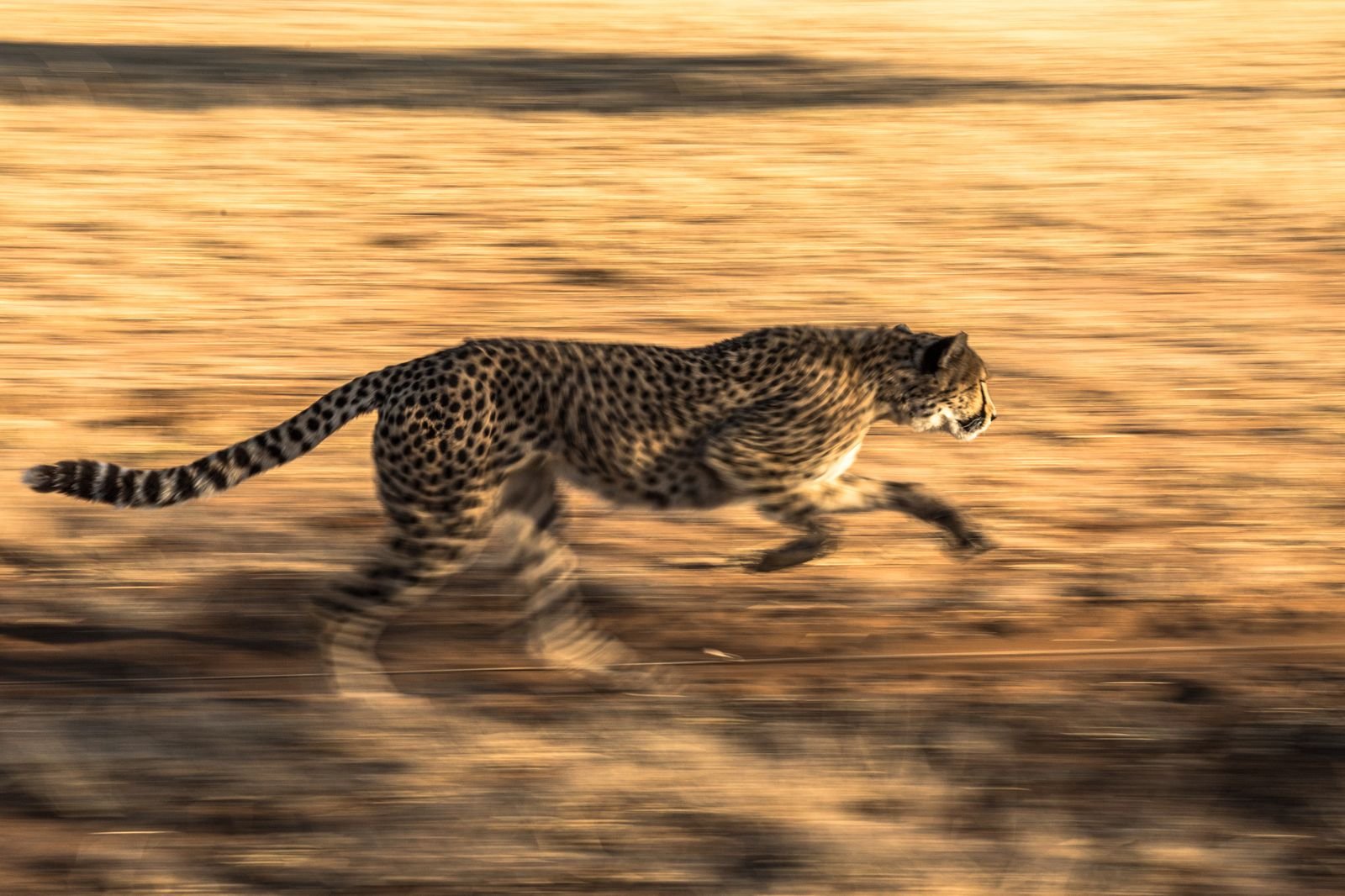
A game drive is a guided drive through the bush in a 4×4 safari vehicle, looking for wildlife with a driver-guide who knows where the animals are likely to be. Most safari days have two of them — one early in the morning and one in the late afternoon — with a long rest at camp in between. If you are wondering whether the whole experience is right for you, read our guide on whether a safari is safe first; this post describes what the day itself actually feels like.
What is a game drive?
A game drive is not a tour with a timetable. Your driver-guide drives slowly through the park, stopping whenever there is something to see, and the day is shaped by what the animals are doing — not by a schedule. The vehicle is a 4×4 with a pop-up roof, so you can stand up for a better view when your guide says it is safe, and sit down again when it is time to move on. The guide drives, spots, and explains; your job is to look, listen, and be patient.
Most of the wildlife you see will be at a distance. A lion resting under a tree, elephants crossing the plain, a leopard in the branches — these are real sightings, and they are worth more than a close-up that disturbs the animal. Your guide will position the vehicle for the best view without crowding the animal, and will wait if the animal is doing something interesting. Patience is the skill that matters most on a game drive, and it is the one thing you can control.

A typical day on safari
| Time of day | What happens |
|---|---|
| Before dawn | Wake-up call and tea or coffee at camp |
| Sunrise | Morning game drive, when animals are most active |
| Mid-morning | Back at camp for brunch and a rest |
| Midday | Long rest at camp — the heat of the day |
| Afternoon | Afternoon game drive, into the golden hour |
| Evening | Dinner at camp, then an early night |
The pattern is the same on almost every safari, because it follows the animals. They are active in the cool hours and resting in the heat, so you are too. The midday rest is not wasted time — it is when you shower, sort your photos, read, and recover from the early start. By the third day, the rhythm feels natural: up before dawn, out with the light, back for a slow lunch, out again as the day cools.
The morning game drive
The morning drive is the best game viewing of the day. You leave camp before sunrise, when the light is soft and the animals are moving — lions returning from a night’s hunting, elephants heading for water, herds grazing in the open. The first hour is the coldest part of the day, especially in the Mara and on the Ngorongoro crater rim, so wear your warm layer. It comes off quickly once the sun is up.
Breakfast is usually a picnic in the bush or a late brunch back at camp, depending on the day. A full-day drive, with a picnic lunch, is an option on some routes — your guide will suggest it when the animals are far from camp, and it means a longer day with more ground covered. Either way, the morning drive is the one to be awake for: the light is better for photography, the animals are active, and the park is at its quietest.
The afternoon game drive
After the midday rest, the afternoon drive starts as the heat eases. The light turns golden, the animals start moving again, and this is the best time for photography — long shadows, warm colour, and animals silhouetted against the sky. The afternoon drive usually ends as the sun goes down, and you are back at camp before dark.
The afternoon is also when your guide may look for the animals you missed in the morning. If the morning was quiet, the afternoon is the second chance — and the animals are often in different places by then. Do not judge a day by the morning alone. Some of the best sightings happen in the last hour of light, when the park is emptying and the animals are on the move.

How long is a game drive?
A morning or afternoon game drive usually lasts a few hours, and a full-day drive with a picnic lunch lasts most of the day. The exact length depends on the route, the animals, and the camp’s schedule — there is no fixed duration, and your guide will not cut a good sighting short to keep to a timetable. What matters more than the hours is the pace: slow driving, long stops, and time to watch rather than tick off a list.
If you are travelling with children, ask about shorter drives. A private vehicle means you can come back to camp early if the children are tired, and that flexibility is worth more than an extra hour in the bush. For the rest of what to bring, our safari packing list covers clothing, binoculars, and camera gear for the drive itself.
Wildlife etiquette on a game drive
The rules are short, and they exist for a reason. Stay in the vehicle unless your guide tells you otherwise. Keep your voice down when you are close to animals. Do not feed anything, and do not try to touch anything — even the animals that look calm. Keep your arms and camera inside the vehicle. And when your guide says it is time to move on, move on — the animal’s comfort comes before your photograph.
There is one rule that matters most: do not crowd the animal. If several vehicles are at a sighting, your guide will wait for space rather than push in. A sighting shared quietly is better than one fought over, and the animals notice the difference. If you want to know what you might see, our guide to the Big Five in Kenya and Tanzania covers where each of the five is most commonly seen, and how realistic a sighting is on each route.
Getting the best sightings
The best sightings come from listening to your guide and being patient. Your guide reads tracks, listens for alarm calls from birds and monkeys, and knows which waterholes the animals are using. When they stop and listen, be quiet. When they say to look at a particular tree, look — the leopard is usually exactly where they said it would be.
Bring binoculars and keep them around your neck, not in your bag: the animal you need them for appears without warning. Keep your camera ready with the lens cap off, and learn the basic settings before the trip — the light changes fast at dawn and dusk, and there is no time to read a manual when a lion walks past. And accept that some days are quiet. A quiet morning is not a failed safari; it is the bush being the bush. The animals are wild, and no sighting can ever be guaranteed — that is the point.
One habit separates the travellers who see the most from the ones who see the least: they watch the guide, not just the bush. When the guide stops the vehicle and listens, they have heard something — an alarm call, a branch breaking, a sound you cannot place yet. Stay quiet, look where they are looking, and wait. The second habit is to look behind you as well as ahead: animals cross behind the vehicle more often than you would think, and the best sighting of the day is sometimes the one nobody was looking for.

What to wear and bring on a game drive
Wear layers: a warm jacket for the cold start, a shirt for the heat of the day, and a hat and sunscreen throughout. Closed shoes are better than sandals in the vehicle, and a light scarf or buff helps with dust on dry roads. Bring water, your binoculars, your camera, and a small bag for the layers you take off. Everything else stays at camp.
The one thing most travellers forget is a torch. You will need it walking to dinner after dark, and you will want it in your tent at night. A small head torch is ideal — it leaves your hands free and does not disturb the animals. And if you are unsure how tipping works at the end of the trip, our safari tipping guide explains who to tip, when, and how.
Frequently asked questions
How long is a game drive?
A morning or afternoon game drive usually lasts a few hours, and a full-day drive with a picnic lunch lasts most of the day. The exact length depends on the route, the animals, and the camp’s schedule — your guide will not cut a good sighting short to keep to a timetable.
What time do game drives start?
Before dawn, so that you are out in the bush as the light comes up — that is when the animals are most active. The afternoon drive starts as the heat eases and runs into the golden hour, and you are back at camp before dark.
Can I get out of the vehicle on a game drive?
Only when your guide tells you it is safe — at a designated picnic spot, for example. At a sighting, stay in the vehicle. Animals see the vehicle as one large, uninteresting object; a person standing up or getting out changes that completely.
Will I definitely see the Big Five?
No — no sighting can ever be guaranteed, because the animals are wild. Some are commonly seen on most routes, and others take luck and patience. Your guide will give you the honest chances for your route, and the best sightings come from listening to them and being patient.
A game drive is slow, quiet, and early — and that is exactly why it works. The animals set the pace, your guide reads the bush, and the best moments come when you stop trying to control the day. Pack your binoculars, wear your layers, and trust the person driving. If you want to check the rest of the practical preparation, our guide on whether a safari is safe covers health and safety — and when you are ready to plan the trip itself, contact us and tell us what you want to see.
Ready to turn this into a real safari?
Tell us your dates, group size and the parks you want to see. We will confirm the exact price in a written quote — no price is published here until the owner confirms it.