The Big Five — lion, leopard, elephant, buffalo and rhino — can all be seen on a Big Five safari in Kenya and Tanzania, but no single park gives you the best chance of all five. The Maasai Mara and the Serengeti are strongest for the first four, Lake Nakuru and the Ngorongoro Crater give you the best chance of rhino, and leopard is the hardest of the five to find anywhere. This guide works through each animal honestly: where your chances are best, what to expect, and how many days you need.
Nobody can promise you all five on a Big Five safari — the Big Five is a checklist, not a guarantee. The migration shapes where the animals are through the year, so read our Great Migration calendar alongside this guide.

What a Big Five safari actually is
The term comes from hunting, not wildlife watching: the five animals considered most dangerous to hunt on foot were the lion, leopard, elephant, buffalo and rhinoceros. Safari travellers kept the list, and it is now the classic first-safari goal. It says nothing about cheetahs, giraffes, zebras, hippos or the migration itself — often the animals people remember most.
The five differ enormously in how easy they are to find. Lions and elephants are commonly seen on a normal safari, and buffalo are hard to miss in the right parks. Leopards are solitary, nocturnal and superbly camouflaged — a sighting is a matter of luck and a good guide even in the best parks. Rhinos are the rarest of the five, and your chances depend almost entirely on which park you visit, which is why the park choice matters more than the number of days.
Lion: the easiest of the five on a Big Five safari
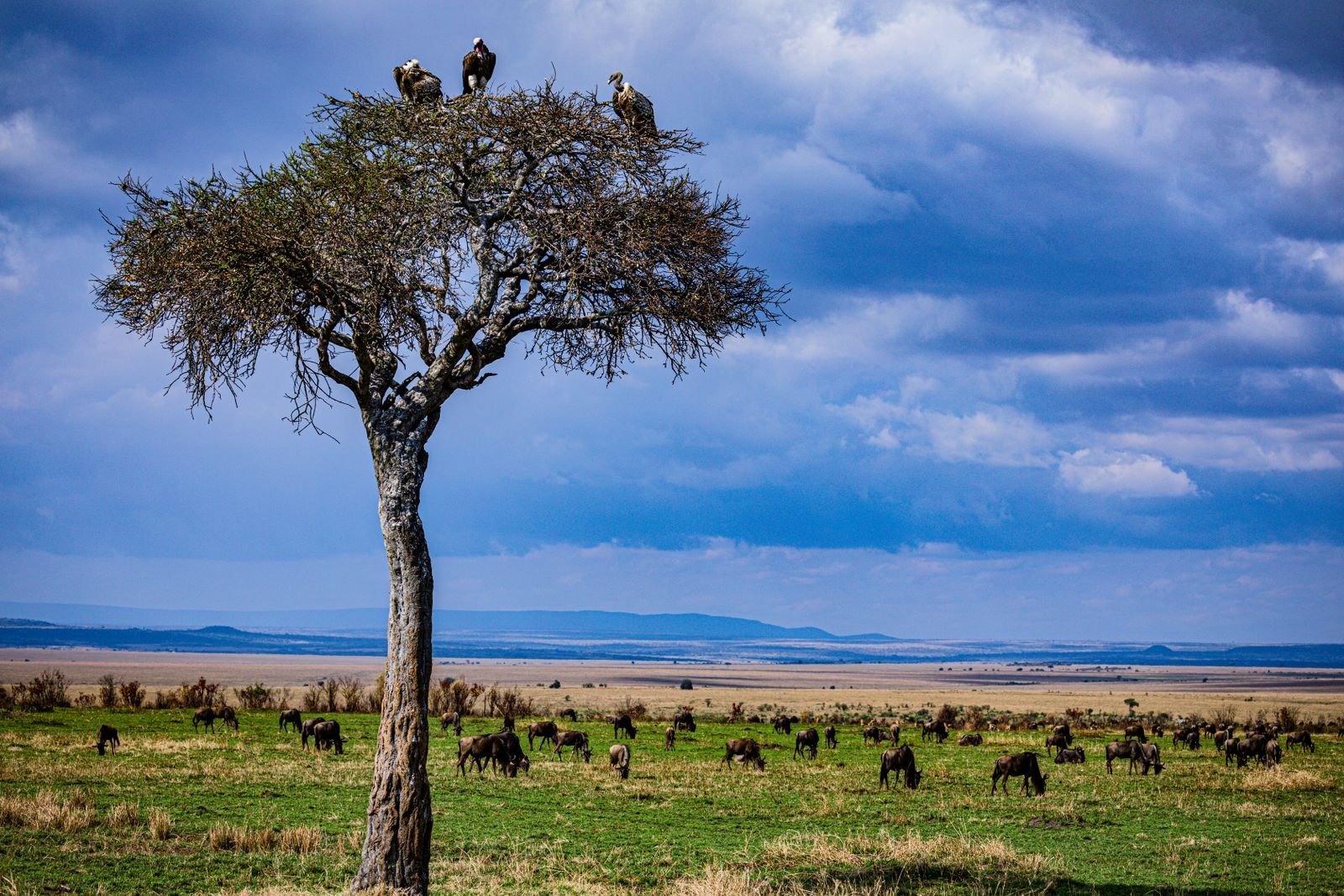
Lions are the Big Five animal you are most likely to see, and the Maasai Mara and the Serengeti are the two best places in East Africa to see them. Both hold lions in good numbers, the prides are used to vehicles, and the open grassland makes them easy to spot. The dry season, June to October, is the best time: the grass is short and the animals concentrate around water.
The Ngorongoro Crater is the other strong lion park — the crater floor is small and the wildlife dense, so a day on the floor often includes lions. Tarangire and Lake Nakuru also hold lions, but the Mara, the Serengeti and the crater are the three parks to build a lion-focused trip around.
What to expect
Expect to see lions resting far more often than hunting — they sleep for most of the day, and a typical sighting is a pride lying in the grass or in the shade. The best sightings come early in the morning and late in the afternoon. A full day in the Mara or the Serengeti in the dry season commonly includes at least one lion sighting — but “commonly” is not “always”.
Leopard: the hardest of the five on a Big Five safari
Leopards are the animal most first-time safari travellers underestimate: solitary, mostly active at night, their spotted coats disappearing into dappled shade. Even in the best leopard country, a sighting is a matter of luck, patience and a guide who knows the animals’ habits.
Your best chance is in the Maasai Mara and the Serengeti, where leopards live along the rivers and in the rocky outcrops called kopjes — the Mara’s Talek River area and the Serengeti’s central kopjes are where guides check first. The dry season helps, because thinner cover makes a leopard in a tree easier to spot, but it is still a sighting you have to work for. Plan at least three or four days in leopard country, go out early, and let your guide do the searching.
One honest note: if a leopard is the animal you most want to see, say so when you enquire — a good guide will plan your days around the riverine areas where leopards live, rather than the open plains where lions are easier. Our guide to Kenya vs Tanzania compares the two countries’ parks for each kind of wildlife.
Elephant on a Big Five safari: Amboseli and Tarangire
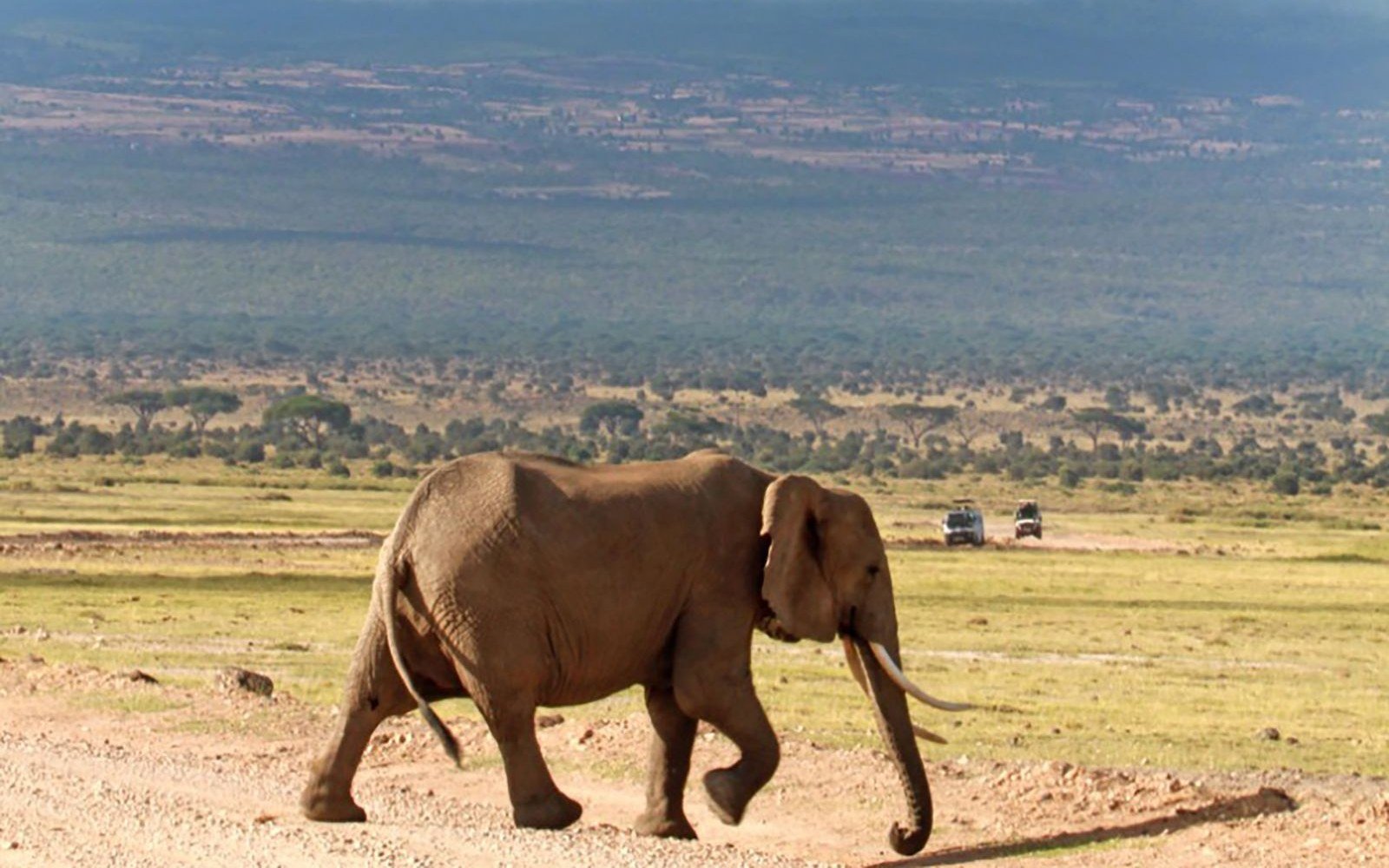
Elephants are the most widespread of the Big Five — you can see them in almost every park in Kenya and Tanzania. But the two parks that turn an elephant sighting into a memory are Amboseli and Tarangire. Amboseli is famous for its large-tusked elephants crossing the dry lake bed with Kilimanjaro behind them, gathering at the swamps in the dry season (June to October), when the mountain is clearest in the early morning. In Tarangire, the elephants gather along the river in large herds among the baobabs, also from June to October.
The Maasai Mara and the Serengeti also hold elephants, but the herds are smaller and the animals are more spread out. If elephants are your priority, build the trip around Amboseli or Tarangire rather than the Mara. Amboseli’s entry fee is US$90 per non-resident adult per 24 hours, flat all year, and Tarangire’s is US$59.00 in peak season and US$53.10 in low season (checked October 2026). Fees change — confirm the current rate before you book.

Buffalo on a Big Five safari: the one you will not miss
Buffalo are the least glamorous of the Big Five and the easiest to find. They live in large herds, graze in the open, and are present in almost every park in both countries — a day in the Mara, the Serengeti or the Ngorongoro Crater in the dry season will almost certainly include them.
Rhino on a Big Five safari: the rarest of the five
Rhino is the animal that decides your itinerary. Black and white rhinos are rare, heavily protected, and concentrated in a few parks — if you want a realistic chance, go where they are: Lake Nakuru, the Ngorongoro Crater, or the Mara.
Lake Nakuru is the best rhino park in Kenya. The park is fenced and heavily protected, and it holds both black and white rhinos — white rhinos graze the open grassland around the lake, black rhinos browse in the bush. It is the one park in Kenya where rhino is a reasonable expectation rather than a hope. Our Lake Nakuru guide covers the park, including its flamingos and its US$90 per adult per 24 hours entry fee (checked October 2026).
The Ngorongoro Crater is the best rhino park in Tanzania. The crater floor is small and the rhinos are monitored, so a day on the floor gives you a genuine chance — though the rhinos are often far away, and a sighting through binoculars counts. Entry is US$70.80 per adult per 24 hours, plus a crater service fee of US$295 per vehicle per descent (checked July–October 2026). Our Ngorongoro Crater guide explains the descent and the day. The Maasai Mara also holds black rhinos, but they are few and hard to find — a Mara rhino is a bonus, not a plan.
A note on Samburu
Samburu National Reserve, in northern Kenya, is the place for animals you will not see further south — including the reticulated giraffe, Grevy’s zebra and the long-necked gerenuk — and it holds elephants, lions and leopards too. It is not a rhino park, and not the place to build a Big Five safari around, but it is the best addition to a Kenya trip for wildlife you cannot see in the Mara. Our Samburu guide covers the reserve; its entry fee is set by the county and confirmed in your written quote, never quoted here because sources disagree on the figure.
Where to see all five: the parks compared
| Park | Lion | Leopard | Elephant | Buffalo | Rhino |
|---|---|---|---|---|---|
| Maasai Mara | Best chance | Best chance | Commonly seen | Commonly seen | Possible, rare |
| Serengeti | Best chance | Best chance | Commonly seen | Commonly seen | Very rare |
| Ngorongoro Crater | Best chance | Possible | Commonly seen | Commonly seen | Best chance in Tanzania |
| Lake Nakuru | Often seen | Possible | Not a feature | Often seen | Best chance in Kenya |
| Amboseli | Often seen | Possible | Best chance | Often seen | Not present |
| Tarangire | Often seen | Possible | Best chance | Often seen | Not present |
| Samburu | Often seen | Best chance in the north | Commonly seen | Less common | Not present |
Fees change — confirm the current rate before you book. The fees that matter here (checked October 2026): Maasai Mara US$100 per adult per day from January to June, US$200 from July to December; Serengeti entry US$82.60 peak, US$70.80 low season per 24 hours; Ngorongoro US$70.80 per 24 hours plus US$295 per vehicle per crater descent; Lake Nakuru and Amboseli US$90 per 24 hours; Tarangire US$59.00 peak, US$53.10 low season.
How many days do you need for a Big Five safari?
Five days is the practical minimum for a Big Five safari, and seven is better. The reason is not the lions and elephants — you will see those on day one in the Mara or the Serengeti. It is the leopard and the rhino, which need time and the right park: three days in the Mara or Serengeti plus two days in the crater or at Nakuru gives you a realistic chance of all five.
Time also matters within the day: the best sightings come in the first two hours after sunrise and the last two before sunset, when the cats are active and the light is good. A trip that rests at midday and goes out early and late will see more than one that drives all day in the heat.
Wildlife spotting tips that actually help
- Go early. Be at the gate or out of camp at first light. The first two hours are the best of the day.
- Let the guide search. A good guide reads tracks, listens to alarm calls and knows where the animals were yesterday. Tell the guide what you most want to see.
- Bring binoculars. One pair per person if you can — sharing one pair means half the sightings are missed.
- Be patient at a sighting. Animals behave when the vehicle waits quietly. Ten minutes at a lion sighting will show you more than three minutes at four sightings.
Frequently asked questions
Which park is best for the Big Five in Kenya and Tanzania?
No single park is best for all five. The Maasai Mara and the Serengeti are strongest for lion, leopard, elephant and buffalo; for rhino, go to Lake Nakuru in Kenya or the Ngorongoro Crater in Tanzania. Combining the Mara or Serengeti with the crater or Nakuru gives you the best chance of all five.
Can you see all of the Big Five in one day?
It is possible in the Ngorongoro Crater on a lucky day — the crater floor is small and holds all five — but it is not something to plan on. Leopard and rhino make a single-day Big Five unlikely, so give yourself at least five days across two parks.
Where is the best place to see rhinos in Kenya?
Lake Nakuru — it holds both black and white rhinos in a protected, fenced park, and rhino is a reasonable expectation there. The Maasai Mara also holds black rhinos, but they are few and hard to find.
Is it safe to see the Big Five on safari?
Yes, with a professional driver-guide and by following park rules: stay in the vehicle where required, follow camp guidance after dark, and keep a respectful distance from wildlife. Your guide briefs you at the start of the trip. For the full picture, check official travel advice before you travel.
What is the best time of year to see the Big Five?
The dry season, June to October, is best overall: short grass, animals concentrated at water, and the easiest spotting. February is the best quiet-season alternative, with calving season in the southern Serengeti and excellent predator action. See our Great Migration calendar for the month-by-month pattern.

Build a Big Five safari around the two hardest animals, not the three easiest: pair the Mara or the Serengeti — for lions, leopards, elephants and buffalo — with Lake Nakuru or the Ngorongoro Crater for rhino, give yourself at least five days, and go in the dry season. The herds decide where the predators are, so check the Great Migration calendar before you fix your dates. For a trip built around your own Big Five priorities, our custom safari packages are planned around the animals you most want to see, with every price confirmed in your written quote.
Ready to turn this into a real safari?
Tell us your dates, group size and the parks you want to see. We will confirm the exact price in a written quote — no price is published here until the owner confirms it.